Fall Photo Contest October 8–19, 2026
Veterinary students, you work hard—and we want to see what a day in your life looks like!
Share a photo of you and your favorite animal. The photo can be from the clinic, farm, lab, rotations, or anywhere in between. Prizes: First place wins a $500 Amazon gift card, second place wins a $250 Amazon gift card, and third place wins a $100 Amazon gift card.
Ready to share your photo?
Enter for a chance to win one of three Amazon Gift Cards up to a $500 value. NO PURCHASE NECESSARY. You must be 18+ and a U.S., PR, USVI, or GUAM resident. Starts at 12 a.m. PT on 10/8/2026 and ends at 12:59 p.m. PT on 10/19/2026. Odds of winning depend on total number of entries received. See Official Rules at the link below. Subject to the Sponsor’s privacy policy. Limit one prize per person. Void where prohibited. Sponsored by AVMA Insurance Services, LLC, 1931 N. Meacham RD, Schaumburg, IL 60173.
Link to privacy policy and contest rules.
Note: Only photos of you and animals are eligible to win; group photos with people other than the entrant will not be accepted.
Heat Waves: Dr. C and the Case of the Thermal Burn Following a C-Section
Dr. C evaluated a 3-year-old intact female Great Dane show dog presented for dystocia (difficulty delivering puppies). The dog had produced two puppies, but no additional puppies had been delivered in the previous two hours. Radiographs confirmed that additional puppies remained in the uterus, and ultrasound revealed the presence of fetal heartbeats. The client elected to proceed with a cesarean section (C-section). The patient was considered an appropriate surgical candidate based upon a pre-anesthetic exam and laboratory testing.
The patient was placed in dorsal recumbency, and a ventral midline abdominal incision was performed. The uterus was exteriorized, and additional puppies were delivered via C-section. The puppies received supportive care while the dam recovered from anesthesia. The procedure lasted approximately 120 minutes. During surgery, the patient received intravenous fluid therapy and thermal support using an electric heating pad. The patient recovered uneventfully and was discharged with her puppies later that day.
Several days later, the patient returned to Dr. C for pain and crusting along her back. Over the following days, areas of dead and damaged skin developed along the dorsum and were suspected to be thermal burns caused by prolonged contact with the heating pad during surgery. Several areas of damaged tissue required surgical removal (debridement) and were managed as open wounds. Additional revision surgeries were performed over the following months.
The client sought $10,000 for the cost of follow-up care and the loss of the dog’s ability to continue competing as a show animal. Dr. C submitted a claim to their professional liability insurance carrier.
Management of Anesthetized Patients
The use of thermal support in anesthetized patients has been demonstrated to reduce the risk of hypothermia (an abnormally low body temperature) during anesthesia. Several factors can contribute to hypothermia during general anesthesia, including cool operating rooms, exposure to cold surfaces and equipment, and the body’s reduced ability to regulate temperature while anesthetized.
Several medications used during anesthesia can impair the body’s normal ability to regulate temperature. For example, alpha-2 agonists can cause peripheral vasoconstriction, while inhalant anesthetics often cause vasodilation. These changes in blood flow can alter how heat is distributed throughout the body and contribute to heat loss. Hypothermia also can slow drug metabolism and prolong recovery from anesthesia.
For these reasons, external warming devices are commonly used during general anesthesia. A variety of commercially available options exist, including heated surgical tables, circulating warm-water blankets, and forced warm-air systems. Each provides controlled surface warming to help maintain body temperature during anesthesia.
It is essential to use warming devices that are designed and approved for use in anesthetized patients. Because anesthetized patients cannot recognize or move away from excessive heat, they are at an increased risk of thermal injury. These injuries can range from skin burns to severe tissue damage requiring extensive treatment.
The use of microwave-heated items such as warming discs, rice socks, fluid bags, gloves, or bottles can result in thermal injury. Likewise, direct heating sources such as electric heating pads should not be used for thermal support during anesthesia because they can cause serious thermal injury.
Appropriate warming devices should be monitored throughout the anesthetic procedure to ensure they are functioning properly and not causing patient injury. Prolonged anesthetic procedures, areas of thin skin, and pressure at points of contact can all increase the risk of thermal injury. Patient temperature should be monitored throughout the procedure, and warming devices should be used and monitored according to the manufacturer’s recommendations. Temperature readings should be documented in the anesthesia record.
In this case, it was determined that Dr. C used an inappropriate warming device during anesthesia. The insurance carrier settled the claim with the owner for $6,150 and paid $1,775 in legal defense costs on behalf of Dr. C.
References
1. Pottie RG, Dart CM, Perkins NR, Hodgson DR. Effect of hypothermia on recovery from general anesthesia in the dog. Aust Vet J. 2007 Apr;85(4):158-62. doi: 10.1111/j.1751-0813.2007.00128.x. PMID: 17397389. https://pubmed.ncbi.nlm.nih.gov/17397389/
2. American Animal Hospital Association (AAHA). 2020 AAHA Anesthesia and Monitoring Guidelines for Dogs and Cats. J Am Anim Hosp Assoc. 2020;56(2). https://www.aaha.org/globalassets/02-guidelines/2020-anesthesia/anesthesia_and_monitoring_guidelines_final.pdf
3. The American College of Veterinary Anesthesia and Analgesia Small Animal Anesthesia and Sedation Monitoring Guidelines. 2025. https://www.vaajournal.org/article/S1467-2987(25)00071-6/fulltext
4. AVMA PLIT. Risk Alert: Iatrogenic Thermal Injuries in Veterinary Practice. JAVMA Newsletters. https://avmajournals.avma.org/view/journals/javma/264/3/javma.264.3.ins.pdf
Financial Planning When You’re Not Ready for a Financial Planner
Authored By: Landon Evans
For many young professionals, the idea of working with a financial planner feels premature. Not because money is being ignored, but because life still feels unfinished. Income may be rising but inconsistent. Student loans remain part of the picture. Long-term goals exist yet feel too fluid to put into formal plans. In that stage of life, financial planning often feels like something to postpone until things are more settled.
That hesitation has only been reinforced by today’s environment. Market volatility, ongoing conversations around inflation and interest rates, and a constant stream of financial headlines can make long-term decisions feel harder to commit to. When uncertainty is high, waiting can feel like the most responsible choice.
But financial planning was never meant to begin only after uncertainty disappears.
Feeling “not ready” for a financial planner usually doesn’t mean being unprepared or behind. More often, it simply means being early. And being early calls for a different version of planning—one that emphasizes understanding and structure rather than optimization.
At this stage, financial planning is less about having the perfect strategy and more about developing financial awareness. Education plays a central role here. Understanding how cash flow works, how different types of accounts function, and why certain decisions matter creates confidence that no spreadsheet alone can provide. Without that understanding, even well-built systems can feel fragile or confusing.
Many people assume financial education requires mastering every detail of investing or tax law before taking action. In reality, early financial education is about learning enough to make informed, reasonable decisions—not perfect ones. Knowing the difference between saving and investing, understanding why emergency reserves matter, or recognizing how employer benefits fit into a broader picture can dramatically reduce stress and hesitation.
Education also helps demystify markets. When you understand that market volatility is a normal feature rather than a signal to act or retreat, short-term movements become less emotionally charged. Knowledge provides context, and context makes consistency possible.
Alongside education, structure remains essential. Simple systems—such as automated savings, clear account purposes, and basic risk protection—allow progress to happen quietly in the background. These systems don’t require constant attention, and they don’t depend on precise predictions about the future. Instead, they create stability while your understanding continues to grow.
One common fear among young professionals is the concern about “starting wrong.” The belief is that acting before feeling fully informed might lead to mistakes that are difficult to undo. In practice, early-stage financial decisions are highly flexible. As knowledge improves and circumstances evolve, systems can be adjusted. Waiting, on the other hand, often reinforces inertia and missed opportunities for learning.
Financial planning is not a single decision point. It is an evolving process that grows alongside your career, income, and confidence. Early education and simple structure make later planning more effective, not less. When the time comes to work with a financial planner, those who have already invested in understanding their finances tend to have clearer questions, stronger engagement, and better outcomes.
If you don’t feel ready for a financial planner, that doesn’t mean financial planning isn’t for you. It means your focus should be on learning, building awareness, and creating simple systems that support progress without pressure.
Planning doesn’t begin when everything feels certain. It begins when you decide to understand your money well enough to move forward—one informed step at a time.
Disclosure:
The information provided in this article is educational in nature and is not intended to be a recommendation for any specific investment product, strategy, plan feature, or other purposes. Accordingly, it should not be construed as personalized investment or tax advice for compensation.
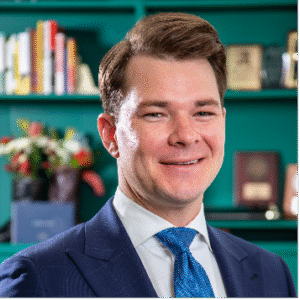 Landon Evans is Managing Partner at VetWealth, a financial services provider for the Veterinary Community. He has been an AVMA Insurance Services representative since 2018 and is the campus representative for both Texas Tech SVM and Texas A&M CVM, following his grandfather Bob’s legacy as the state of Texas’ exclusive AVMA Insurance Services representative since 1968. He received the CLTC designation in 2024 and is a frequent speaker at veterinary conventions and universities on the subjects of personal finance.